
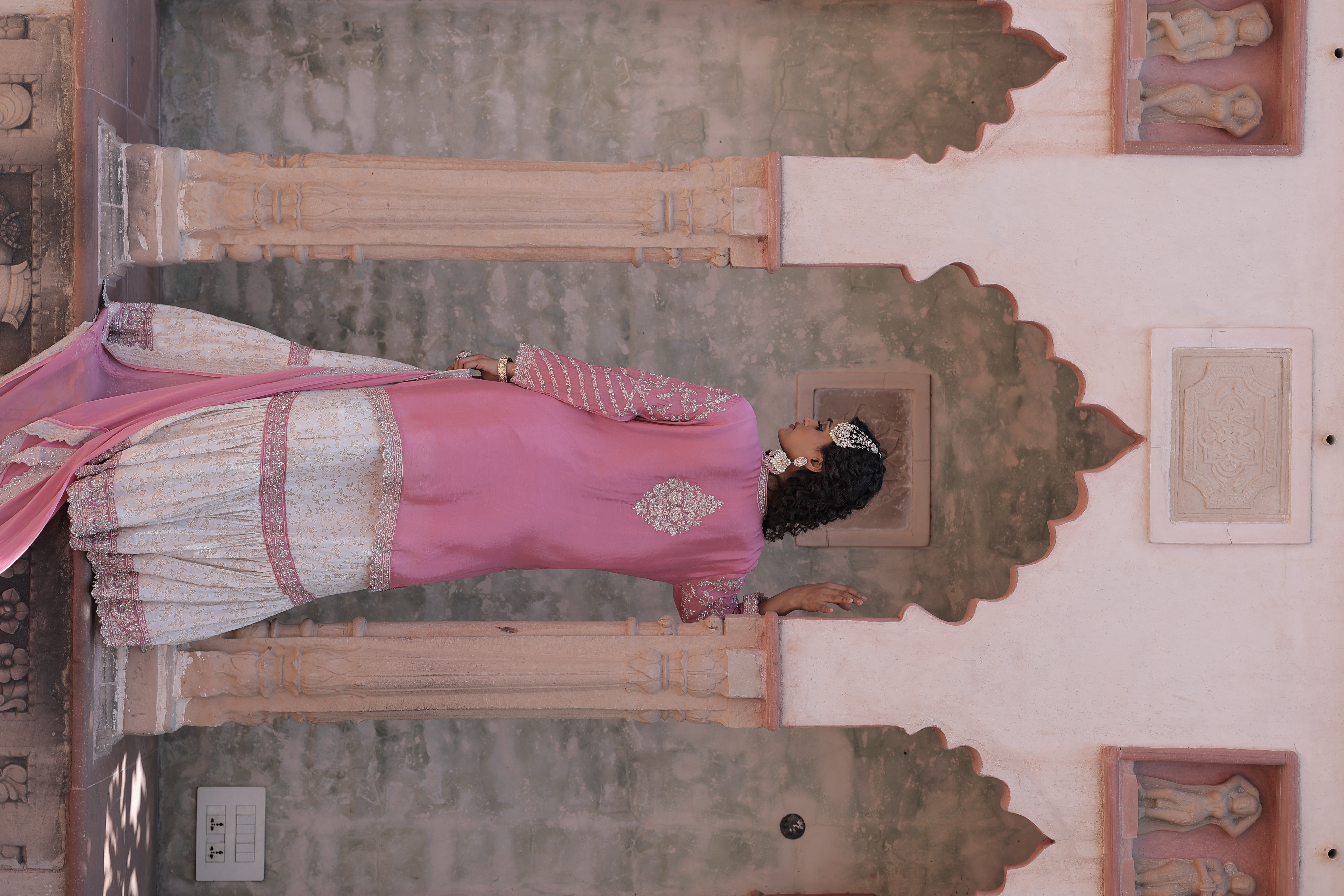
A Farshi Sharara is a graceful traditional outfit inspired by Mughal-era dressing and Indo-Persian fashion influences. Known for its wide flare, floor-grazing fall, and regal appearance, it has evolved over time into a loved part of South Asian and Indian ethnic wear.
The word “Farshi” comes from “farsh,” meaning floor. A Farshi Sharara gets its name from the way the lower garment flows towards the floor, creating a grand and elegant silhouette. Unlike a regular sharara, which may have a lighter or shorter flare, a Farshi Sharara is usually fuller, more dramatic, and more occasion-focused.
Today, Farshi Sharara sets are chosen for weddings, festive occasions, family functions, Eid celebrations, engagement ceremonies, and semi-bridal looks. For customers, the outfit offers a royal traditional feel. For boutique owners and retailers, it is a high-impact ethnic wear style that stands out beautifully in festive and wedding collections.
What Does Farshi Sharara Mean?
A Farshi Sharara is a traditional outfit style made up of a kurti or short top, a heavily flared sharara bottom, and a dupatta. The main feature is the lower garment, which has a wide, floor-touching flare.
The term “Farshi” refers to the floor-grazing look of the outfit. This is what gives the Farshi Sharara its signature appearance. The style is deeply inspired by old royal silhouettes, especially Mughal-era and Indo-Persian fashion influences, where flowing garments, rich fabrics, and detailed surface work played an important role.
Over time, the Farshi Sharara moved from a courtly and heritage-inspired silhouette into modern occasion wear. Today, it is seen in wedding ethnic wear, festive collections, designer sharara suits, boutique collections, and readymade ethnic wear.
Origin and Inspiration of the Farshi Sharara
The Farshi Sharara carries inspiration from Mughal and Indo-Persian dressing traditions. These influences are visible in the outfit’s flow, volume, embroidery, and regal presentation. The wide flare and floor-length fall give it a look that feels royal, graceful, and rooted in heritage.
While the style has historical inspiration, modern Farshi Sharara designs have been adapted for today’s customers. The outfit is now created in different fabrics, colours, embroidery styles, and ready-to-wear patterns. This makes it suitable for modern Indian weddings, festive wear, family celebrations, and retail ethnic wear collections.
This balance of heritage and modern wearability is one reason why Farshi Sharara sets continue to remain popular.
Key Features of a Farshi Sharara
A Farshi Sharara is different from a regular suit set because of its structure, fall, and overall visual impact. These are the key features that define the outfit.
1. Wide Flare
The flare is the most important part of a Farshi Sharara design. A good Farshi Sharara has volume in the lower garment, giving it a rich and graceful appearance.
The flare also creates movement when the outfit is worn. This makes the Farshi Sharara look beautiful in person, in product photos, in wedding pictures, and on store display.
2. Floor-Grazing Fall
The floor-grazing fall is what gives the outfit its “Farshi” identity. The lower garment is designed to flow towards the floor, creating a royal and dramatic look.
This floor-touching effect separates it from regular shararas and makes the outfit more suitable for weddings, festive occasions, and semi-bridal styling.
3. Regal Silhouette
A Farshi Sharara has a grander silhouette than many regular ethnic outfits. It gives the wearer a traditional, graceful, and statement-making look without becoming as heavy as a full bridal lehenga.
This is why many customers prefer Farshi Sharara suits for occasions where they want something rich but still wearable.
4. Embroidery and Surface Work
Farshi Sharara sets often include embroidery, zari work, threadwork, mirror work, handwork, sequins, beadwork, or border detailing. The embroidery may appear on the kurti, sharara, dupatta, sleeves, hemline, or neckline.
The right embroidery placement can make the outfit look premium without making it uncomfortable or overly heavy.
5. Complete Occasion-Ready Set
A Farshi Sharara is usually styled as a complete set with a kurti and dupatta. This makes it easier for customers to wear and easier for retailers to display.
For boutique owners and ethnic wear retailers, a complete Farshi Sharara set is easier to present as a ready-to-stock festive or wedding outfit.
Farshi Sharara vs Regular Sharara
Many customers confuse a Farshi Sharara with a regular sharara. While both outfits have flared bottoms, the overall look and purpose are different.
A regular sharara usually has a flared bottom but may be lighter, simpler, and easier to wear for casual or semi-festive occasions. A Farshi Sharara has a wider, fuller, and more floor-length fall. It looks more dramatic and traditional.
The biggest difference is the volume and fall. A Farshi Sharara gives a richer silhouette, while a regular sharara can be more everyday or semi-occasion focused.
For customers who want ethnic wear that looks grand but do not want to wear a lehenga, a Farshi Sharara suit can be a beautiful option. It gives the richness of traditional occasion wear while still being practical as a complete outfit set.
Farshi Sharara vs Gharara
A Farshi Sharara and a gharara are also often confused, but they are not the same.
A gharara usually has a fitted upper-leg portion and then flares out dramatically from around the knee. The joint or flare point is usually more visible. A Farshi Sharara, on the other hand, focuses more on a flowing, floor-grazing flare and a fuller lower silhouette.
A gharara has a more structured break in shape, while a Farshi Sharara usually gives a softer, more flowing, royal look.
Both styles have traditional roots and both are popular in wedding and festive ethnic wear. The right choice depends on the kind of look the customer wants.
When Can You Wear a Farshi Sharara?
A Farshi Sharara is best suited for special occasions. It works well when the customer wants an outfit that feels traditional, elegant, and premium.
Popular occasions include:
-
Wedding functions
-
Engagement ceremonies
-
Reception events
-
Eid celebrations
-
Diwali parties
-
Festive gatherings
-
Family functions
-
Sangeet and mehendi events
-
Semi-bridal occasions
-
Boutique festive collections
For weddings and festive occasions, customers usually look for rich colours, detailed embroidery, a graceful dupatta, and a flattering silhouette. A Farshi Sharara set brings these elements together in one outfit.
Why Farshi Sharara Is Popular Again
Farshi Sharara sets are popular again because customers are looking for ethnic wear that feels traditional but still looks fresh. The outfit has a heritage-inspired charm, but modern designs make it suitable for today’s weddings, festive events, and occasion wear.
Another reason for its popularity is its visual impact. The flare, fabric fall, embroidery, and dupatta styling make the outfit look strong in photographs and on display.
In the current market, many customers want outfits that are heavier than regular suits but easier to manage than bridal lehengas. A Farshi Sharara fits perfectly into that space. It feels grand, but it remains wearable.
For retailers, this makes Farshi Sharara sets a strong addition to festive and wedding season stock.
What to Look for While Buying a Farshi Sharara
Whether you are buying for yourself or sourcing for a boutique, there are a few important things to check before choosing a Farshi Sharara.
1. Flare and Fall
The flare should look balanced and graceful. If the fabric does not fall properly, the outfit may look bulky instead of elegant.
A good Farshi Sharara should have movement, volume, and flow.
2. Fabric Quality
Fabric plays a major role in how the Farshi Sharara looks when worn. The fabric should support the flare while still allowing the outfit to move naturally.
For festive and wedding ethnic wear, the fabric should also match the embroidery and occasion. Too light, and it may not hold the look.
3. Embroidery Placement
The embroidery should enhance the outfit without making it look overloaded. Good embroidery placement around the neckline, sleeves, hemline, border, dupatta, or lower flare can make the entire Farshi Sharara set look more premium.
For retailers, embroidery placement also matters because it affects how the outfit looks on display and in product photos.
4. Dupatta Design
The dupatta completes the Farshi Sharara look. A well-designed dupatta can make the outfit look more finished, elegant, and occasion-ready.
For wedding and festive wear, a dupatta with border work or delicate detailing can add strong value to the final look.
5. Colour Selection
Colour plays a major role in ethnic wear buying. Soft pastels, jewel tones, festive shades, and rich traditional colours all work differently depending on the occasion.
For weddings and festive collections, customers often prefer colours that look premium in photos and feel suitable for celebration wear.
6. Occasion Suitability
Not every Farshi Sharara is meant for the same occasion. Some are better for festive wear, while others are more suitable for weddings, receptions, or semi-bridal occasions.
Customers should choose based on the level of work, colour, fabric, and styling.
Why Retailers and Boutique Owners Like Farshi Sharara Sets
For retailers and boutique owners, a Farshi Sharara is not just another ethnic wear product. It is a high-display-value outfit.
The wide flare, detailed embroidery, dupatta styling, and royal silhouette make it attractive on mannequins, racks, website photos, and boutique displays. It catches attention quickly because it looks more special than a regular suit set.
Farshi Sharara sets also work well during festive and wedding seasons. Customers shopping for family functions, Eid, Diwali, engagement ceremonies, and wedding events often look for outfits that feel premium but are still wearable.
For wholesale ethnic wear buyers, readymade Farshi Sharara suits can help add variety to a collection. They offer a traditional look, strong visual appeal, and good occasion-wear value for retail stores and boutiques.
Farshi Sharara in Modern Ethnic Wear Collections
Modern Farshi Sharara designs are not limited to one fixed style. Today, they come in different cuts, fabrics, colour combinations, and levels of work.
Some designs are lighter and suitable for festive occasions. Others are heavier and more suitable for wedding collections. Some have a traditional Mughal-inspired look, while others have a more modern boutique-style presentation.
This flexibility makes the Farshi Sharara a useful category for both customers and retailers. It can be styled as graceful occasion wear, festive ethnic wear, wedding ethnic wear, or premium boutique wear.
Farshi Sharara at Usha Ethnics
At Usha Ethnics, Farshi Sharara sets are designed for customers who appreciate heritage-inspired ethnic wear with a refined and occasion-ready look. The collection focuses on graceful flare, rich detailing, balanced embroidery, and complete styling.
The designs are suitable for festive wear, wedding functions, boutique collections, and retail ethnic wear displays. Whether a customer is looking for a special outfit or a retailer is sourcing readymade ethnic wear for the season, a Farshi Sharara set offers a traditional yet high-impact option.
Explore the Farshi Sharara collection at Usha Ethnics or get in touch for retail and wholesale enquiries.
FAQs About Farshi Sharara
What is a Farshi Sharara?
A Farshi Sharara is a traditional outfit inspired by Mughal-era and Indo-Persian fashion influences. It usually includes a kurti, a wide floor-grazing sharara bottom, and a dupatta.
What does Farshi mean in Farshi Sharara?
“Farshi” comes from “farsh,” meaning floor. It refers to the floor-touching or floor-grazing fall of the lower garment.
Is Farshi Sharara Indian ethnic wear?
A Farshi Sharara has Mughal-era and Indo-Persian inspiration, and over time it became part of South Asian and Indian ethnic wear. Today, it is commonly worn for weddings, festive occasions, and traditional celebrations.
What is the difference between Sharara and Farshi Sharara?
A regular sharara usually has a flared bottom, but a Farshi Sharara has a fuller, wider, and more floor-grazing flare. It usually looks more traditional, dramatic, and occasion-focused.
Can Farshi Sharara be worn for weddings?
Yes, Farshi Sharara sets are suitable for wedding functions, engagements, receptions, Eid celebrations, Diwali parties, and festive gatherings.
Can retailers stock Farshi Sharara sets?
Yes, Farshi Sharara sets are a strong option for boutique owners and ethnic wear retailers, especially for festive and wedding season collections.